SDS-Logo
Expert

Print Guillotining

Print guillotining is a vital print-finishing technique for achieving precision and consistency in printed materials. Whether you're preparing a large batch of brochures or creating bespoke packaging, guillotining ensures clean, sharp edges that enchance the professional look of your project. It's the process that transforms a stack of raw prints into polished, ready-to-use products. In this guide, we'll explore the ins and outs of guillotining and its many applications in the print finishing world.

cutting-paper-with-professional-press-machine-2023-11-27-04-56-20-utc

What is Guillotining?

Guillotining in print finishing refers to cutting paper or other printed materials to specific dimensions using a high-accuracy guillotine blade. This technique is widely used for bulk paper cutting and print trimming to ensure uniformity and precision. With guillotining, you get perfectly aligned edges, whether working with a small stack or a large batch of prints.

The hallmark of guillotining is its precision. We can handle various sizes, thicknesses, and formats using advanced guillotine cutting machines, from delicate invitations to robust cardboard. This versatility makes guillotining indispensable in commercial print trimming and paper stack cutting.

Types of Guillotining in Print

Guillotining comes in different forms, tailored to meet diverse project needs. Here are the main types:

Ideal for smaller-scale jobs, manual guillotining involves using a hand-operated guillotine blade. It's a cost-effective solution for projects requiring minimal cuts.

A blend of manual and automated processes, semi-automatic guillotining increases speed and accuracy while maintaining flexibility. It is perfect for medium-sized projects.

Fully automated machines deliver unmatched precision and efficiency for high-volume, large-format guillotining. These machines are essential for bulk paper cutting and high-accuracy guillotine projects.
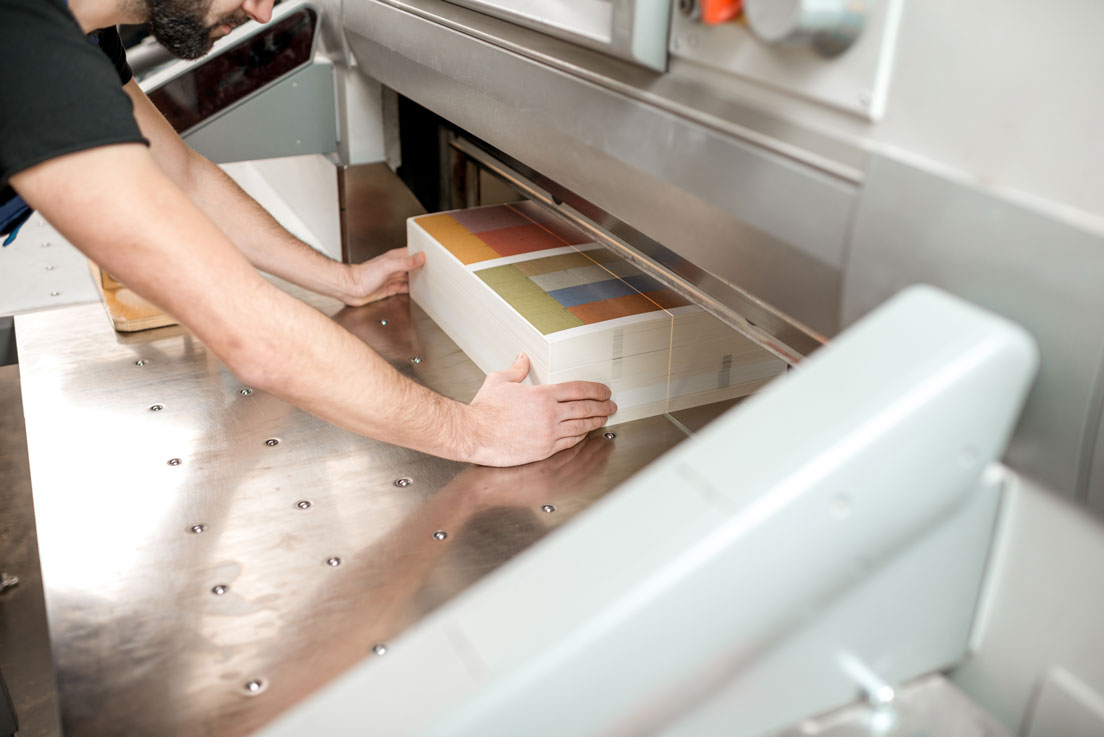
cutting-a-stack-of-paper-for-printing

Why Choose Guillotining?

Guillotining iplays a pivotal role in print finishing services for several reasons:

Precision Cutting

Achieve exact dimensions and a sharp guillotine finish.

Speed and Efficiency

Handle bulk paper cutting quickly without sacrificing quality.

Versatility

Works with various materials, including paper, cards, and laminates.

Professional Appearance

Ensures clean edges that make your print projects stand out.
feeding-paper-for-printing

Applications of Guillotining in Print

Guillotining is versatile and used across various applications, including:

Business Cards

Precision cutting ensures uniformity across hundreds of cards.

Brochures and Flyers

Achieve clean edges for a polished look.

Packaging

Prepare materials like cardboard and laminated prints for custom packaging solutions.

Large Format Prints

Tidy up posters, banners, and other oversized prints.

Guillotining for Any Industry

Many industries rely on guillotining to achieve high-quality results:

Retail

Sharp, clean packaging and point-of-sale displays grab attention and reinforce brand professionalism.

Corporate

The precision of guillotining benefits business cards, reports, and presentations, leaving a lasting impression on clients.

Publishing

Books, magazines, and other publications require precise trimming to meet industry standards.

Events

Guillotining ensures materials look organised and professional, from event brochures to name tags.

The Process of Guillotining in Print

Guillotining is a cornerstone of print finishing. It’s the method used to cut large sheets or stacks of paper into precise sizes, creating sharp, clean edges for materials like business cards, leaflets, booklets, and brochures. Here’s how it all comes together.

The first step is all about setup. The quality of the cut depends on how well the materials are prepared.

  • Alignment: Each sheet is carefully squared off to avoid uneven edges.
  • Stacking: The paper is arranged into a stack, often hundreds of sheets thick. Depending on the machine, it can handle anything from a few sheets to hefty reams.
  • Securing: The stack is clamped tightly, so nothing shifts when the blade comes down. A small misalignment could ruin the cut.

Getting the measurements right is critical. Modern guillotines make this step easier with precise digital settings.

  • Measurements: Exact dimensions are inputted to guide the cut.
  • Guides and Markers: Laser guides or physical markers show where the blade will land.
  • Test Cuts: A quick trial on scrap material ensures everything’s dialled in before cutting the actual stack.

This is where the magic happens. Guillotining relies on a sharp, heavy-duty blade to slice through stacks with precision.

  • Blade Action: The angled blade descends smoothly, cutting cleanly through the stack.
  • Multiple Cuts: For more intricate jobs, the stack might need several cuts to achieve the desired sizes or trim edges.
  • Repositioning: Between cuts, the stack is adjusted for the next dimension.

Once the cutting is done, it’s time to inspect the results. No shortcuts here—this step ensures everything looks spot on.
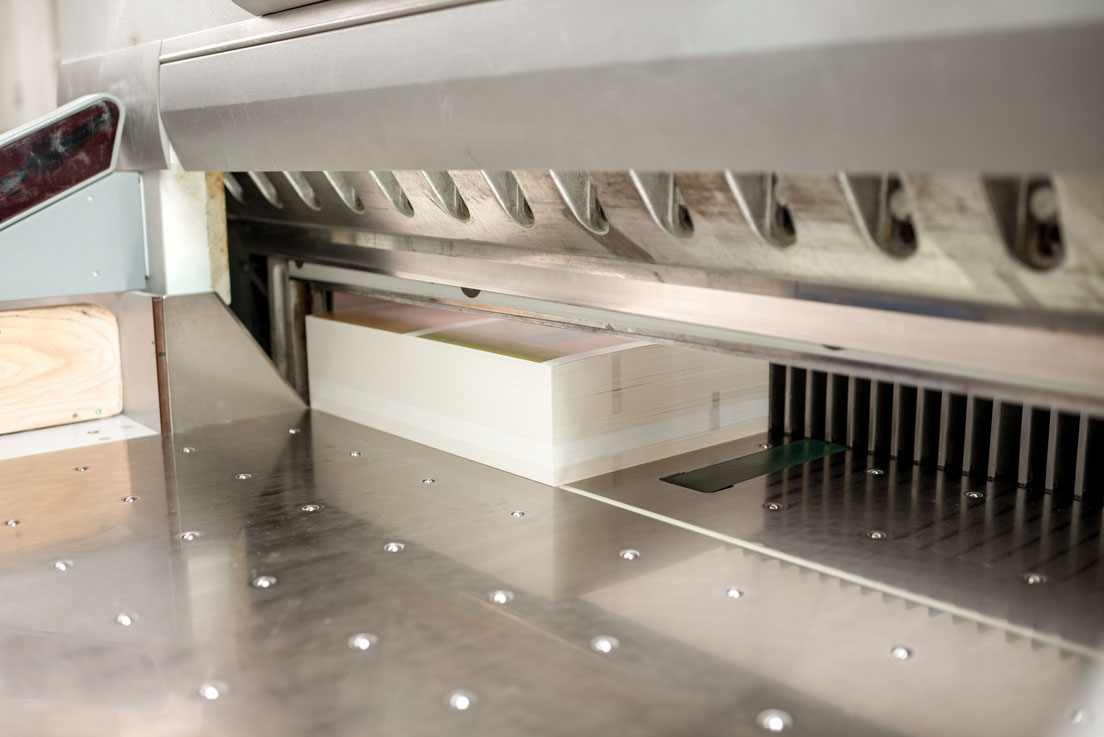
  • Edge Consistency: Clean, straight edges are non-negotiable. Uneven cuts signal a dull blade or misalignment.
  • Size Accuracy: Each piece is measured against the specs to ensure perfection.
  • Defects: Any miscuts or damaged pieces are pulled from the batch.
cutting-paper-with-professional-press-machine

Why Choose Us as Your Trusted Partner?

Every project is unique, and we pride ourselves on delivering exceptional results.

Precision Craftsmanship

Our team of experts ensures every detail is executed flawlessly.

High-Quality Materials

We use only the best, from premium card stocks to speciality papers.

State-of-the-Art Equipment

Advanced tools guarantee sharp, precise impressions every time.

Ready to Get Started?

Achieve clean and precise cuts with our guillotining expertise. Contact us for flawless edges on every project.
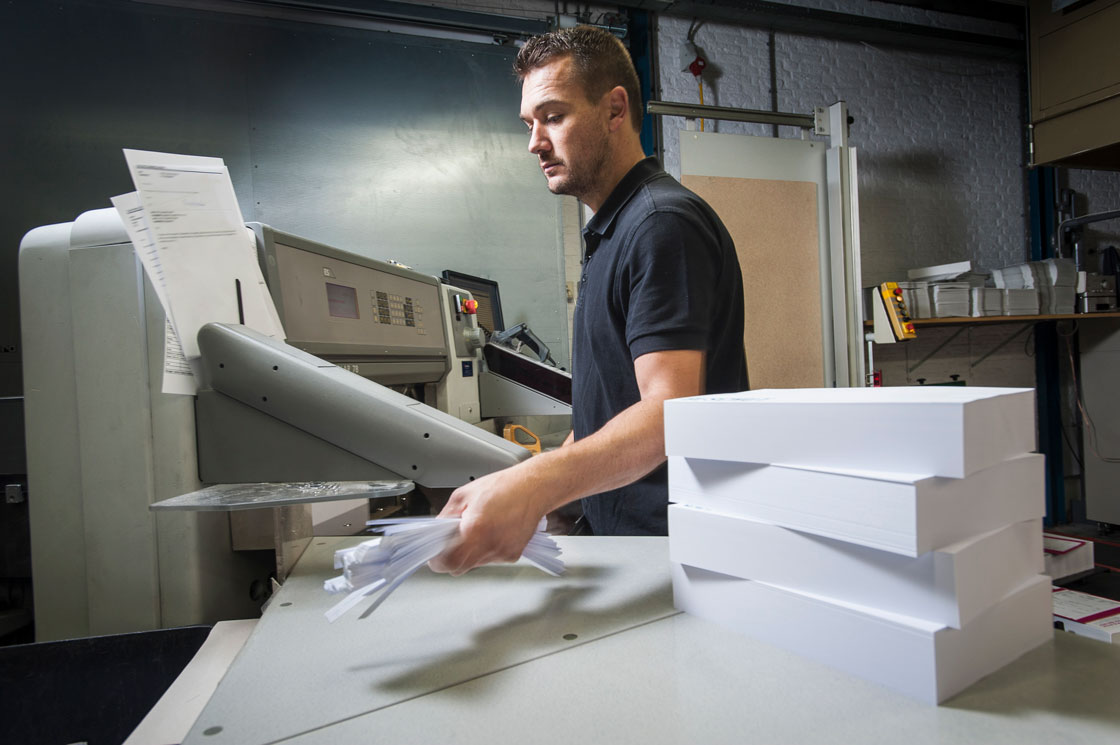
worker-disposing-of-paper-trimmings-in-print-works-2024-06-04-19-48-35-utc