SDS-Logo
Expert

Print Perforation

Print Perforation offers a seamless way to add practicality without compromising design, whether you’re creating tear-off cards, tickets, or forms. Let’s dive into how perforation in print finishing works and why it could be the perfect choice for your project.

Box-With-Print-Perforation

What Is Print Perforation?

Perforation is a precise cutting process that creates a series of small holes or slits in the material, making it easy to tear sections cleanly without damaging the rest of the piece. It’s widely used in various printed products such as vouchers, tear-away sections, and custom forms.
At its core, perforation is all about combining practicality with aesthetics. By enabling easy section separation, it adds a functional layer to your print while maintaining its professional look.

Types of Print Perforation

Understanding the different types of perforation can help you choose the most suitable option for your project:

Micro-Perforation

Ideal for precision and clean edges, micro-perforation is commonly used for tear-off cards and detachable forms.

Standard Perforation

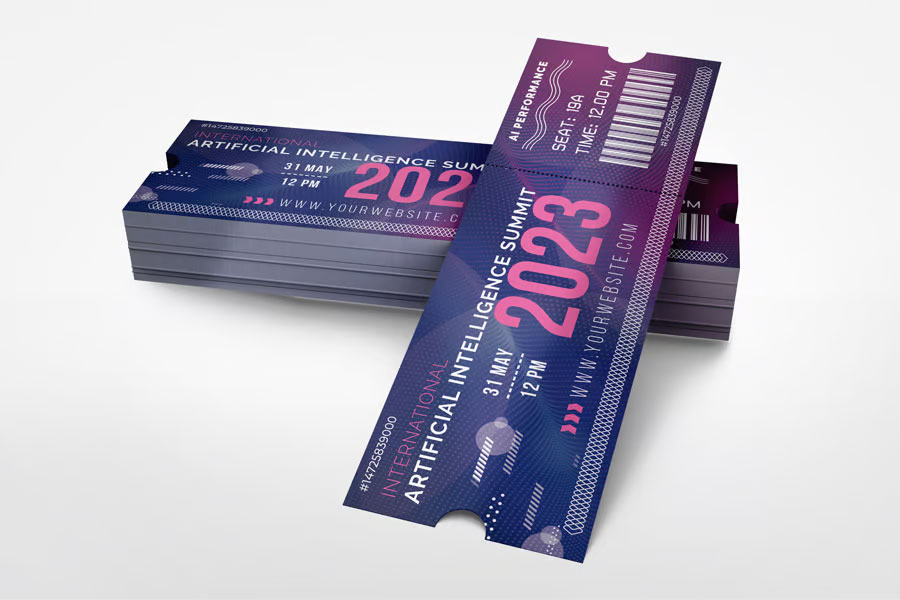
With slightly larger holes, this option works well for ticket printing and other functional applications where easy tearing is key.

Slit Perforation

Instead of circular holes, slit perforation creates straight cuts, often preferred for perforated edge printing and vouchers.

Custom Perforations

Custom perforations allow for creative and functional applications tailored to your unique design needs.
Tickets-With-Perforation

Why Choose Print Perforation?

Here are the main benefits of adding perforation to your print materials:

Ease of Use

Tear-away sections like vouchers or tickets can be easily removed without damaging the entire piece.

Professional Finish

The precise nature of perforation ensures your prints look clean and polished.

Versatility

Whether used for promotional materials, business forms, or event tickets, perforation is versatile.
Forms-with-Perforation

Applications of Print Perforation

Perforation is highly versatile and can be applied across various printed products, including:

Tickets

Perforation ensures easy distribution and validation from concert events to raffles.

Vouchers

Encourage redemption with tear-away sections for promotions.

Forms

Detachable forms streamline workflows in business and education.

Notebooks

Perforated sheets make removing pages effortless.

Print Perforation for Any Industry

Perforation is a staple in numerous industries:

Corporate

Business forms, invoices, and reports.

Retail

Gift vouchers, discount coupons, and loyalty cards.

Hospitality

Tear-away menus and reservation forms.

The Process of Print Perforation

Print perforation is about creating minor cuts or holes in paper or card. These cuts make it easy to tear or fold along a specific line without damaging the rest of the material. You’ve seen this on coupons, tickets, forms, and packaging. Let’s break it down step by step.

The first step is picking the material that suits your project. It depends on how the final product will be used and how durable it needs to be. Common options include:

  • Paper: Lightweight and easy to tear, perfect for tickets and receipts.
  • Cardstock: Thicker and more robust, ideal for coupons or packaging.
  • Speciality materials: Think synthetic paper for projects that need extra durability.

Suitable perforation starts with thoughtful planning. You need to ensure the perforation works with the design and the function. Here’s what to consider:

  • Perforation line placement: Where will the tear or fold happen?
  • Patterns: Straight lines are standard, but curves or custom shapes can add flair.
  • Spacing: Close cuts make tearing easier, while broader spacing offers more strength.

Adobe Illustrator or CAD software are often used to create accurate layouts.

The right equipment is key to getting clean, consistent results. Depending on the project, you might use:

  • Rotary perforation: A wheel or cylinder with sharp teeth rolls over the material for high-volume jobs.
  • Die-cut perforation: Custom dies create specific shapes or patterns with high precision.
  • Manual or semi-automatic tools: Great for smaller runs or bespoke projects.

Machines are carefully set up to get the correct pressure, speed, and depth.

If your project includes printing, it happens before perforation. This ensures everything lines up perfectly. Common methods include:

  • Offset printing: Best for large runs and high quality.
  • Digital printing: Ideal for smaller batches or customisation.

Once the setup is complete, it’s time to perforate. The material runs through the machine, and the perforation pattern is applied precisely. Important considerations:

  • Accuracy: The cuts must match the design perfectly.
  • Consistency: Every piece must look and function the same.

Some machines can also handle additional steps like cutting or folding in the same run.

Every project goes through a final inspection to ensure:

  • Tearability: The perforation should tear cleanly without fraying.
  • Alignment: Cuts must match the design exactly.
  • Uniformity: Every piece should meet the same high standard.

After perforation, materials are trimmed, folded, or bundled as needed. Sometimes, extra steps like laminating or die-cutting are added before everything is packaged and shipped.

perforated-leaflet

Why Choose Us as Your Trusted Partner?

Every project is unique, and we pride ourselves on delivering exceptional results.

Precision Craftsmanship

Our team of experts ensures every detail is executed flawlessly.

High-Quality Materials

We use only the best, from premium card stocks to speciality papers.

State-of-the-Art Equipment

Advanced tools guarantee sharp, precise impressions every time.

Ready to Get Started?

Create tear-away sections with precision perforation. Contact us to add practicality to your print projects.
Event-Tickets-With-Print-Perforation